







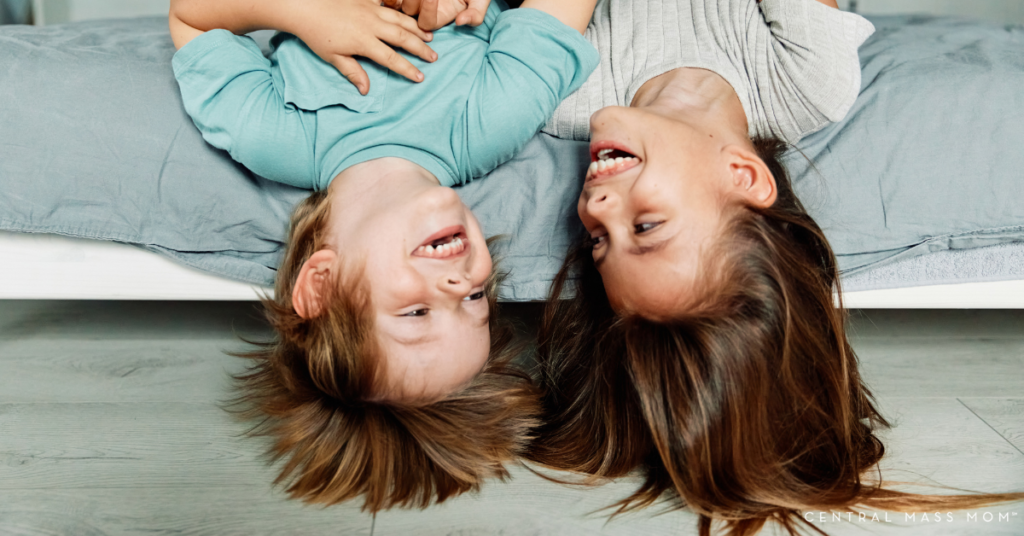
 Siblings have a unique relationship. On a good day, siblings are built-in best friends who have a shared secret language and a ride-or-die mentality. On a bad day (or more often, about 30 seconds after they were just getting along swimmingly), siblings can become mortal enemies, eviscerating each other with verbal barbs or resorting to hitting and hair pulling.
I spend a lot of time with my kids thinking about how to foster and support their sibling bond. It can be tricky! The closeness of the relationship means that feelings on both ends of the spectrum are deeply felt and intensely expressed. I’m finding that helping the kids navigate this means striking a balance between coaching and stepping back, and between giving them time together and giving them space.
Here are five strategies I am using that seem to be helping my own kids have a (mostly) peaceful and kind relationship:
Not Forcing Sharing
If the grown-ups who raised and taught you were anything like the family and teachers in my world, the concept of sharing was always a forced thing that demanded instant gratification. “Just share! Give her a turn now.” Is a thing that my peers and I heard a lot growing up.
The problem with this approach is that it is unrealistic. It also fosters resentment. There is no situation in real life where you are expected to immediately give away something that is yours just because someone else wants it. Equally, adults are rarely asked to cede time with something they are enjoying just so they can let someone else enjoy it. Waiting is a part of life we all need to get used to. And forcing these actions makes the unwilling giver feel angry, coerced, and jealous.
Avoid this pitfall by adopting a fairer policy about sharing. Allow siblings to have some toys that just belong to them. Let them be the boss of whether that toy is played with together or whether they keep it to themselves. I find that with my own children, allowing this autonomy always leads to them coming to share the toy. Inevitably, they want to play with it with someone, and their sibling gets included. But this way, the decision was theirs, and there’s no hard feelings around the sharing.
When it comes to turn-taking, a helpful phrase to keep in mind is “no one can play with anything for eternity.” You may not get a turn this very instant, but one will happen eventually. I find it helpful to coach my kids to request, “May I have that when you are all done?” And to respond, “When I am done, I will make sure you get a turn.” This way, everyone eventually gets a turn, and no one feels like they were rushed in their enjoyment.
Give Them Space Together
One way to support a relationship between siblings is to take the adults out of it. Allow them space to play by themselves without an adult in the mix. When they were very little, I accomplished this by just sitting on the far side of the room while they worked on a building project together or played a pretend game. Now that they are older, I leave them to play on their own in a completely different room.
The results have been great. Over time, they have become able to sustain up to an hour of independent play in which they make up their own rules and create their own universes.
When conflicts come up- which happens a lot- Resist jumping in right away. Leave them space to struggle through their conflict on their own. Many times, they end up coming up with their own resolutions. Hopefully, this skill will grow over time and translate into working through the bigger conflicts we know are looming for us in their teenage years.
Other (frequent) times, their disagreements escalate into yelling and/or physical lash-outs. When this happens, it is time to step in.
Referee Their Arguments & Aim Toward Meaningful Apologies
When it comes time to step into my kids’ conflicts, you won’t hear me say, “Say you’re sorry.” In my experience, this strategy yields an insincere apology and no changes in behavior. Instead, I rely on some strategies I learned as a teacher that I would love to share.
First, check in with whichever kid is most upset. Help them calm down with hugs and then coach them to talk to their sibling using this script: “When you ____ it made me feel _____ do you agree not to do that again?” Then turn to the other child and let them make a similar request. The goal here is to help the kids express what made them upset and why they acted out. This way, they can take some perspective about what is motivating their sibling and have some empathy about what their words/actions made the other sibling feel.
If any harmful acts or words have been perpetrated, I help the kids repair. Ask the hurt/upset child what they need to feel better, and invite the child who did the hurting to make amends. This might be a verbal apology, a hug, making a silly face, grabbing an ice pack to nurse a bonk, or giving their sibling space.
This strategy aims toward repairing a wrongdoing and aiming for a future behavior change, which is an apology through action rather than words. In my experience, this has a more meaningful and longer-lasting impact on the relationship.
Plan for Time Apart
Siblings spend a lot of time together. And humans naturally get sick of each other. My college roommate was my perfect soulmate friend, and even we got tired of each other at times.
Circumvent this relationship fatigue by giving the kids the chance to get away from each other. You can do this in bigger ways, like planning individual special dates with a single sibling and one parent. Or, try to do this in small ways, like taking one kid grocery shopping while the other stays home with the other parent. You can also build things into your routine, like individual quiet time in which the kids have an hour of completely independent play in separate rooms.
These mini breaks go a long way in helping the kids feel refreshed and ready to keep playing together.
Have the Kids Participate in Gift Giving for One Another
Our family has started a birthday tradition of taking the non-birthday sibling on a top-secret mission to buy a gift for the birthday sibling. It does not have to be anything big. We set the budget at under $20. What matters is the search. The child gets the chance to think about what their sibling loves and help conspire to make them happy by providing it.
The kids get to take turns practicing thoughtfulness and receiving thoughtfulness. This helps to build the relationship because the kids take turns feeling cared for and being the one to do the caring.
Sibling relationships are an ever-evolving and constantly challenging thing. I hope these ideas help you on your journey. Be sure to comment with other ideas that have worked for you. Everyone can always use more strategies!