







 I’m guessing that if this article caught your attention, your relationship with food occupies a lot of your brain space. Whether you are an ex-dieter, new intuitive eater, or child of an almond mom, you want better for your kids when it comes to how they feel about food and their bodies.
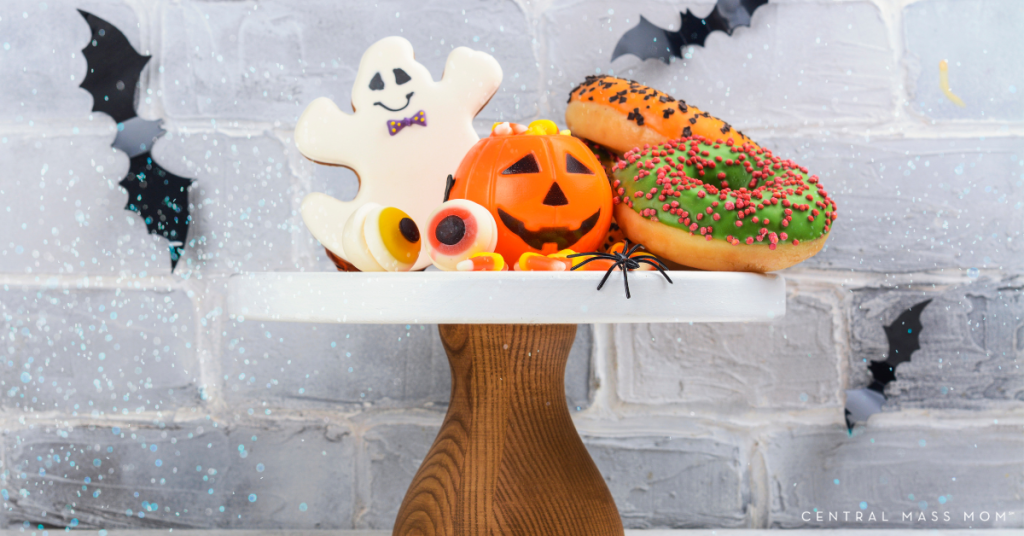
Halloween marks the beginning of the season of treats and eats. How do you teach your child to navigate this? To not compulsively eat to the bottom of their trick-or-treat pail while you’re putting the baby down for a nap. To leave the last few bites of cake when they’re full. It’s an evolving process as they age, and this time of year leaves room for plenty of practice and conversations.
What are my credentials to talk about this? I’m a recovered lifelong dieter who was determined not to pass on my food issues to my kids. Today I saw the changes in action when my 3-year-old put down a cookie to eat more broccoli at lunch. Additionally, I have nutrition and lifestyle training as a national board-certified health and wellness coach.
To set the scene, when I say healthy relationship with food, what does that look like? To put it simply, it’s making room for all foods without guilt or shame. Listening to your body and learning what your body needs for you to feel your best.
When it comes to navigating the Halloween candy or any holiday treat for that matter, where do you start?
Serve candy with a meal
A simple change is to serve candy with a meal instead of making it the reward for eating all their food or taking bites of a certain food. Why does this work? It presents all foods as equal to your child. When they have to jump through hoops to get their dessert, it’s sending the message that dessert foods are more desirable, which can lead to a fixation on them. On top of that, it can lead to children ignoring their hunger cues to get dessert. Being in touch with your hunger and fullness cues is a skill that not many adults possess. So if we can preserve those instincts in our children, it will only help them as they grow.
Talk to your kids about how food makes them feel
Talking to kids about how food makes them feel is another way to encourage them to check in with their bodies. Most often, the rules around the Halloween candy get put into place the next day, which is a great time to explore how your child was feeling after the 5 candy bars they ate while trick or treating. Compare it to how they feel and the energy they have after meal or snack times. Then you can relate to this when they’re asking for Halloween candy after school. If you say yes, then the conversation becomes “what else should we have with it to give you the energy you need for soccer practice?” or whatever they have going on that afternoon. This is the beginning of a conversation on building balanced plates and the concept of what the different macronutrients (protein, fats, and carbs) do for your body.
Outside influences
Feeling tempted to polish off your child’s entire Halloween candy bucket while they’re at school? This is the struggle you don’t want to pass on to your kids. There is a lot of food noise out there, and diet culture was a huge influence, particularly on millennials, as we were growing up. It is encouraging to know that kids are born knowing how to intuitively eat and listen to their bodies. It’s the outside influences that can disrupt how they respond to their body’s cues. A conscious effort to help your child build trust in and connect to their body is a great way to support what starts out as instinct.
If you feel as though you need support with your own relationship with food, seek the support of a registered dietitian.