






 There are many different breathing and meditation techniques that are known for calming the mind and body. These methods are known for reducing stress and anxiety, allowing for better night sleep, and even helping with some cardiovascular and respiratory issues. Breathing techniques are recommended by various professionals, like therapists, physical therapists, gym/yoga instructors, pulmonologists, and cardiologists. However, if you have respiratory or cardiovascular issues, panic attacks, or on medications, you should consult with your doctor if you have any questions about whether you should try breathing techniques or not.
Breathing techniques are easy in the sense that they can be done at work, at your desk, in the car, while on a walk, or while dinner is in the oven.
If you find these techniques challenging, you can start with shorter times and work your way up. You may find that there are certain ones that you like better than others and some that you don’t like at all. Practicing regularly will make them easier and more beneficial to your overall well-being.
If you feel safe and comfortable, you may close your eyes if you wish to try these techniques.
4-7-8 Method
For this breathing technique, sit in a comfortable position, breathe in through your nose for 4 seconds, hold your breath for 7 seconds, and slowly breathe out through your mouth for 8 seconds. Repeat this cycle 3 more times, for a total of 4 cycles. Do this at least 2 times per day.
Benefit: promotes relaxation and better sleep, can increase concentration, improves emotional regulation, and reduces anxiety.
Box Breathing
For this breathing technique, sit in a comfortable position, breathe in through your nose for 5 seconds, hold your breath for 5 seconds, and slowly breathe out through your mouth for 5 seconds, and hold on the exhale for 5 seconds. Repeat this cycle 3 more times, for a total of 4 cycles. Do this at least 2 times per day.
Benefit: May lower blood pressure, aid in managing pain like COPD, can increase concentration, and reduce anxiety.
Belly Breathing
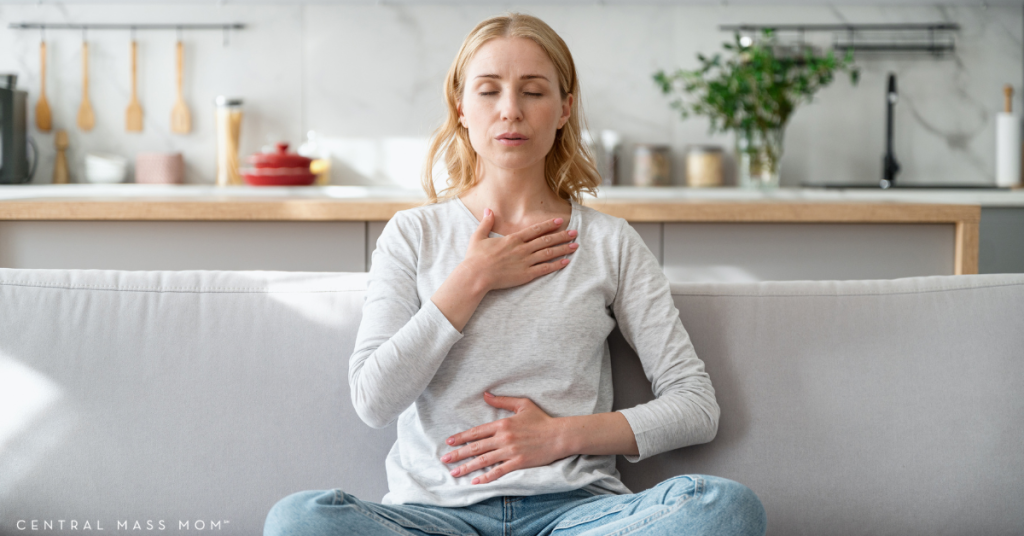
For this breathing technique, sit in a comfortable position, breathe in through your nose for 5 seconds, filling your belly with air, and slowly breathe out through your mouth. Repeat this cycle 5 more times. Do this at least 2 times per day.
Benefit: Improves lung function, promotes relaxation and better sleep, lowers blood pressure, alleviates gastrointestinal issues, and reduces anxiety.
Pursed Lip Breathing
For this breathing technique, sit in a comfortable position, breathe in through your nose for 2 seconds, purse your lips (like whistling,) and breathe out slowly for 4 seconds. Repeat this cycle 5 more times. Do this at least 2 times per day.
Benefit: Slowing your breathing and cleaning out the air in your lungs reduces anxiety
Meditation
I got into meditation a couple of years ago, and I enjoy the quiet time. Like breathing techniques, there are many different types of meditation. Meditation can be done alone or in a group setting. During meditation, it is a good time to practice your breathing. If you are meditating for relaxation and don’t want to fall asleep, it is suggested to sit comfortably in a chair with your feet on the floor.
Meditation can be guided, where the narrator is prompting breathing techniques while telling a story and presenting a visual picture in your mind. This can be with colors, sounds, or smells, and often puts you in your “happy place.” Our “happy places” may vary from person to person. For me, my “happy place” is usually a field filled with different gorgeous wildflowers, along a line of big trees. For my son, his “happy place” is usually more of a beachy setting.
Other meditation sessions may not have any narrators, but rather just have instruments or music. These types of meditation can be used for deep sleep, releasing anxiety, calming, and sometimes even helping with insomnia.
I hope that you find these tips helpful. It’s time to practice. Put yourself in your “happy place,” take a few deep breaths, and relax.