







 Summer Is Almost Here — So Why Do So Many of Us Feel Behind Already?
New research says most Americans are in summer mode before the season even starts. But keeping up with it all? That’s another story.
According to the average American, summer officially begins on May 21. Not the calendar date, not the school year’s end — May 21. And by that measure, we are already in it.
A new survey of 5,000 Americans, commissioned by Factor and conducted by Talker Research, found that 92% of people are in “summer mode” well before the season technically arrives. Which sounds energizing, until you read the next part: the average person feels only 67% prepared for the warmer months.
So we’re mentally in summer. We’re just not quite ready for it. That gap between anticipation and actual readiness? Moms in Central Mass could write a dissertation on it.
New England Is Ready. (More Than Most.)
Here’s some good regional news: people in the Northeast are among the most summer-ready in the country. Residents of Maine (74%), New Hampshire (73%), and South Dakota (73%) topped the list of states feeling most prepared for the season.
That tracks. After the winter we just had, the first genuinely warm weekend feels less like a seasonal transition and more like a personal victory. We have earned this summer, and we intend to use it.
On the flip side, residents of California (61%), Arizona (62%), and New Mexico (63%) are notably less enthusiastic — which makes sense when summer means relentless heat rather than blessed relief.
The Season of Stacked Schedules
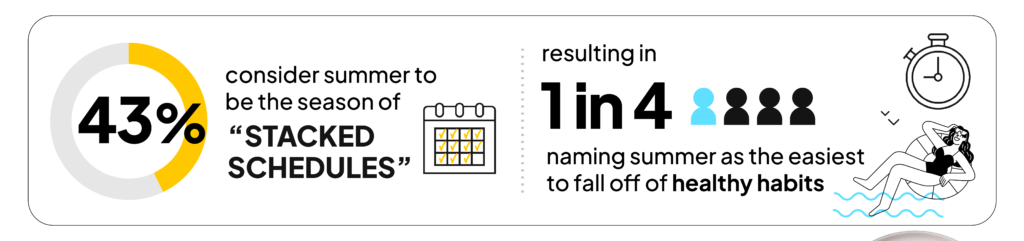
Here’s the tension at the heart of this research: we want a full, rich summer, and we are also exhausted by the thought of it.
Nearly half of respondents (48%) say summer is actually the most energy-draining season of the year. Four in ten are already bracing for what the survey calls a “stacked schedules” season, and 49% are expecting a fast-paced summer overall.
The average respondent says a good summer day takes 54% of their energy — but they don’t always have that to give.
Sound familiar? For moms managing school schedules that dissolve in June, kids who suddenly need to be entertained all day, plus work, plus all the regular life maintenance that doesn’t pause for summer — the season can feel like it demands more than it gives back.
More than a third of Americans (37%) admit they straight-up struggle to keep up with summer. And a quarter say it’s the easiest season to fall off healthy habits (24%) — with New Jersey (38%), New York (37%), and Delaware (36%) leading that particular struggle.
Everyone Wants to Live Their Best Summer. Half of Us Will Run Out of Steam.
The survey asked people what they’re actually hoping to do this summer, and the answers are warm and relatable: spending time with family (55%), getting outside for fresh air (52%), grilling (52%), and seeing friends (44%). One in ten want every single day booked up.
More Americans say they plan to “live their best life” this summer than plan to take it easy (53% vs. 47%). The ambition is real.
But so is the energy drain. Heat is the top culprit (54%), followed by working full-time (30%), meal prepping (15%), and planning out their days (12%). Vacations, ironically, made the list too (11%) — a reminder that even the fun stuff takes something out of us.
The Nutrition Piece Nobody Has Time For — But Everyone Knows Matters
One of the more interesting threads in this research is around food and fueling. Eight in ten Americans say they try to prioritize nutrition during the summer (78%). Only about half of them actually follow through.
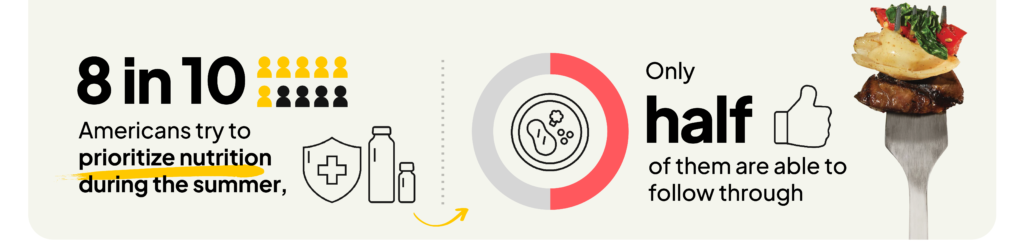
Thirty-nine percent say that taking the time to properly fuel themselves actually slows them down — which is a real and frustrating catch-22. We know eating well gives us more energy. We also know that cooking well takes time and effort we don’t always have at 6 p.m. on a Tuesday in July when three kids need dinner and the kitchen is already a disaster.
“Summer schedules are packed, and the goal should be finding ways to fuel that actually fit into your day, not add to it,” said Kara Kash, head of nutrition at Factor. “When people have access to the right options, nutrition doesn’t have to be the thing that falls through the cracks.”
The top strategies people plan to lean on: staying hydrated (62%), eating lighter meals (31%), focusing on healthier options (22%), and getting more protein (21%). Flexible food choices ranked as a priority for 76% of respondents — which says a lot about how people actually want to eat in the summer versus how diet culture tells them they should.
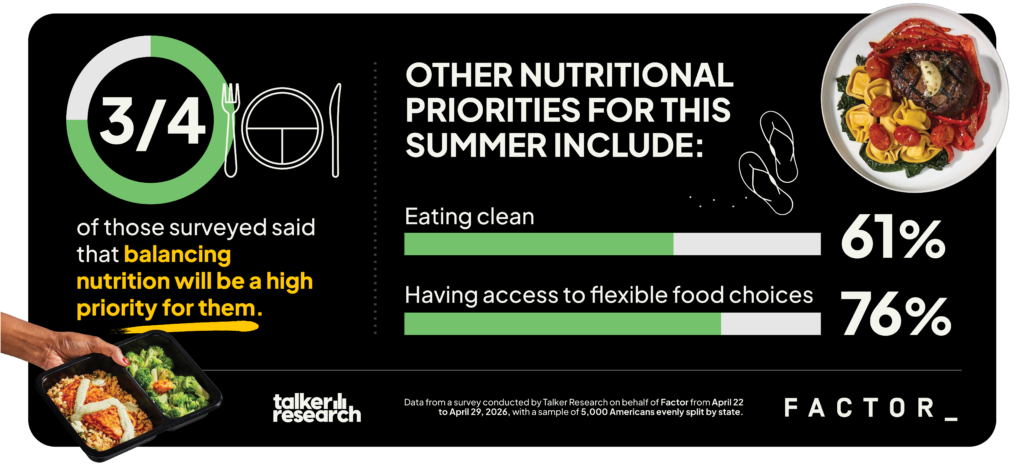
“Nutritional goals don’t require perfection or sacrifice, they just require consistency,” Kash added. “Easy, reliable meals take the decision-making out of it and free up your energy for everything else.”
That’s the kind of advice that’s genuinely useful for a mom who is trying to keep everyone fed and functioning through ten weeks of no school schedule.
What This Means for the Summer Ahead
The through-line in all of this research is that most of us want the same thing: a summer that feels full without feeling depleting. Time with the people we love, some good food, some time outside, and enough energy left over at the end of the day to actually enjoy it.
The families who tend to pull that off aren’t the ones who planned the most — they’re the ones who planned realistically. Who built in rest alongside the activity. Who let go of the pressure to make every single day count and trusted that the ordinary, unscheduled ones would count too.
New England summers are short and they are good. Seventy-four percent of Maine is already ready for it. Let’s not spend the whole thing running on empty.
Survey methodology: Talker Research surveyed 5,000 Americans evenly split by state on behalf of Factor, conducted online April 22–29, 2026.