







 Every spring, when winter finally loosens its grip and the days start stretching longer, something magical happens in our kitchen window. Little green seedlings appear in tiny cups of soil, leaning toward the sunlight like they’ve been waiting all winter for their moment. For kids, that moment feels like pure wonder.
Starting a family garden with elementary school–aged kids doesn’t have to be complicated or perfect. In fact, the messy, funny, slightly chaotic parts are often what make it memorable. Our garden has had years of incredible harvests and years where rabbits ate half the strawberries, and the carrots looked like something out of a Dr. Seuss book. And honestly? The kids love it all.
Here are five vegetables and fruits that kids absolutely love to grow—and why they make the perfect starting point for a family garden.
If you want instant excitement in a kid’s garden, plant cucumbers.
There is something wildly satisfying to children about growing a cucumber that is longer than their forearms. Every morning becomes a treasure hunt: “Did one grow overnight?” Inevitably, one day, they’ll discover a giant cucumber hiding under the leaves like buried treasure.
Kids (mine in particular) love bringing cucumbers to school or summer camp as their snack, proudly announcing, “I grew this!” There’s something powerful about watching children connect the dots between the garden and their lunchbox.
Cucumbers also grow quickly, which is perfect for younger gardeners who want to see results without waiting forever.
Sometimes stoldent by tiny, sweet, rabbits, plant strawberries.
Strawberries teach kids two important gardening lessons: patience… and wildlife diplomacy.
The first strawberry of the season is always a celebration. Kids watch those little green berries slowly turn red day by day. Unfortunately, the strawberries we grow rarely get much bigger than a quarter…and sometimes the rabbits beat us to them.
But even that becomes part of the story.
The kids check the plants every morning, hoping today is the day the strawberry is finally ripe enough to pick. When they do manage to snag one before the rabbits, the victory is enormous. One tiny berry becomes the sweetest snack imaginable simply because they grew it themselves.
If you want the funniest vegetables in the garden, plant carrots.
Carrots are secretly comedians.
When kids pull carrots from the soil, they never look like the perfect ones from the grocery store. Instead, they come out twisted, forked, stubby, or shaped like little orange people doing yoga.
Kids love this.
Pulling carrots is like opening a surprise package. No two look the same, and the weird shapes become instant entertainment. Even picky eaters are far more willing to eat a carrot they just pulled from the ground, especially if it looks like it has “legs.”
If you want to plant a towering giant, plant corn.
Corn might be the most magical plant in the garden for kids.
One week, it’s just a little green sprout. Then suddenly, it’s taller than they are.
Watching corn grow teaches kids about time, patience, and scale. They measure themselves next to the stalks. They check daily to see how much taller the plants have gotten. By midsummer, walking through a small patch of corn can feel like exploring a tiny jungle.
And when the first ear of corn is ready to harvest? It feels like the grand finale of the garden.
The Real Magic Happens Before the Garden Even Starts
The garden actually begins long before we plant anything outside. It starts in early spring, when winter still hasn’t fully let go. We set up trays with small squares of soil by the kitchen window and plant seeds together. Every day, the kids check to see if anything has sprouted yet.
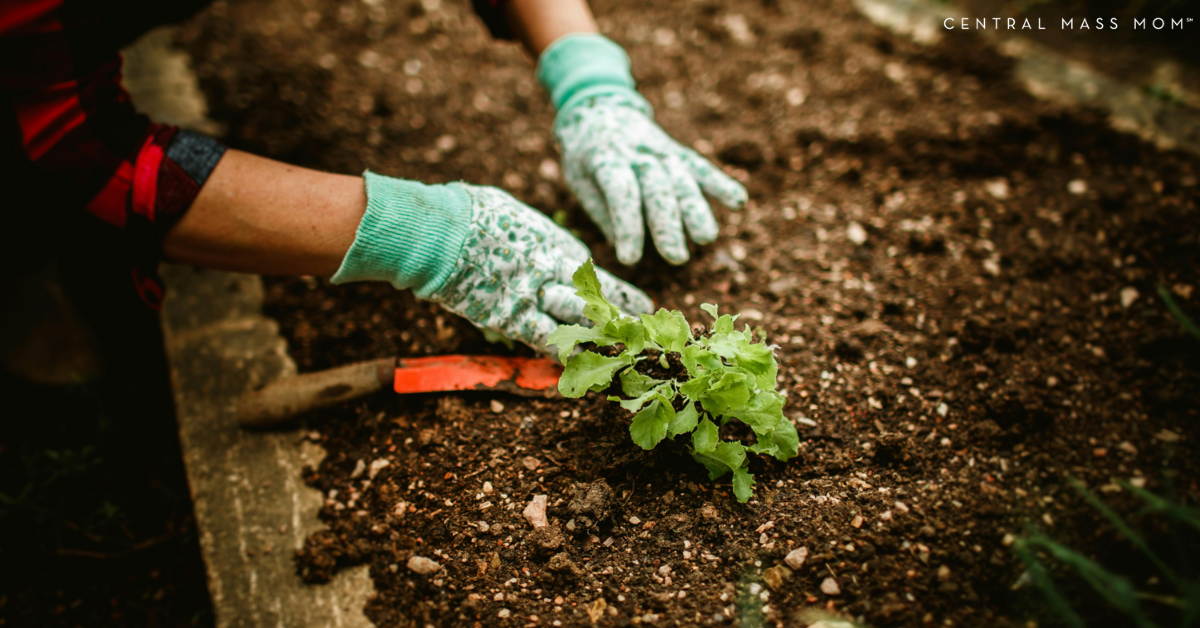
When the seedlings get stronger, we transplant them into larger peat pots, which makes them easier to move later without disturbing their roots. Eventually, when the weather finally warms and spring truly arrives, we carry the plants outside to our raised garden bed.
To kids, it feels like moving the plants from their nursery into their forever home.
Watering, Checking, and Learning How It All Works
Once the garden is planted, the daily routine becomes part of family life.
Kids grab their watering cans and head outside. They inspect every leaf, check for new flowers, and search for vegetables hiding under the plants.
They ask questions constantly:
- Why are the leaves turning yellow?
- Why did the strawberries disappear?
- How does corn get its kernels?
- Why did that cucumber get so absurdly big?
Gardening quietly becomes a science lesson, a patience lesson, and even a math lesson as kids count plants or measure how tall the corn has grown.
Some Years Are Better Than Others
Not every gardening season is perfect. Some years, we plant too many things, and everything gets overcrowded. Some years bugs win. Some years, the weather doesn’t cooperate. And some years the garden produces so many vegetables it feels like we’ve discovered a secret grocery store in the backyard.
But every year brings new lessons and new excitement. Every year, we try a “random” thing, too. This year, they want to try a lemon seed. (Who knows what will happen?!)
The Best Part Isn’t the Vegetables
The real reward of a family garden isn’t the cucumbers or strawberries or corn. It’s the kids running outside first thing in the morning to see what changed overnight. It’s the pride of packing a cucumber so big their lunchbox can’t zip shut…something that might otherwise cause a meltdown… except this would-be-meltdown came from their own garden.
It’s muddy hands, watering cans, surprise yoga-human-shaped carrots, and corn stalks stretching toward the sky. And it’s the quiet joy of watching kids learn that food doesn’t just come from a store. And this is so beautiful to see them coming to an understanding of.
If you’re thinking about starting a family garden, start small. Pick a few easy vegetables, like cucumbers, carrots, and corn, plant them by a sunny window, and let your kids take the lead.
Because somewhere between the seedlings and the harvest, something wonderful grows. Not just in the garden, but in them too.