






School parking lots can be surprisingly dangerous areas. Every day, children walk, ride bikes, or are dropped off by car, sharing space with vehicles that are moving in multiple directions. Poor design and insufficient safety measures increase the risk of accidents, making it crucial for parents to understand what features keep children safe. Awareness of common hazards and preventive measures can help families advocate for improvements and protect their children.
Common Hazards in School Parking Lots
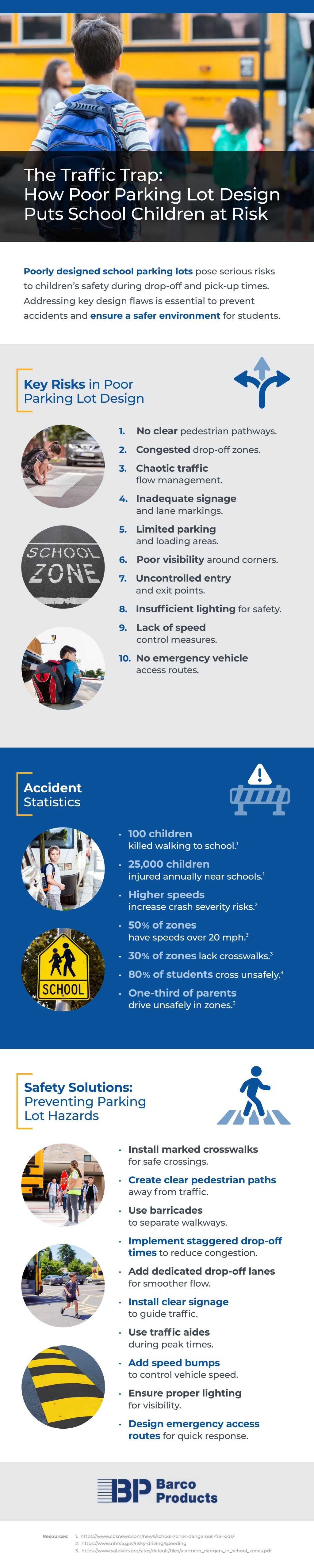
One major hazard is vehicle congestion during drop-off and pick-up times. Cars stopping unexpectedly, drivers backing out without clear sightlines, and multiple lanes of traffic create confusion. Children are often small and hard to see, especially when carrying backpacks or walking alongside friends.
Another risk comes from the lack of clear pedestrian pathways. Without designated crosswalks or sidewalks, children may weave between cars, increasing the chance of being struck. Lighting also plays a critical role. Dimly lit lots during early morning or late afternoon can obscure children, reducing driver reaction time.
Improperly marked parking spaces, tight turning radii, and narrow lanes further exacerbate risk. These conditions make it difficult for drivers to navigate safely and increase the likelihood of collisions. The absence of traffic calming features such as speed bumps or raised pedestrian crossings can also allow vehicles to move faster than is safe in crowded areas.
Ignoring regular maintenance is also dangerous. Potholes, faded markings, and broken signage create hazards that are easily overlooked. Keeping a parking lot in good repair ensures safety features remain effective and visible.
Important Parking Lot Safety Features
Parents should ask their child’s school if they have important parking lot safety features. Well-marked crosswalks, clearly designated pick-up and drop-off zones, speed control measures, and proper lighting are fundamental. Additional measures include curb extensions to shorten crossing distances, separate entrance and exit lanes to reduce congestion, and physical barriers to separate pedestrian areas from moving vehicles.
Supervision is also essential. Crossing guards, staff monitoring vehicle flow, and volunteers assisting with drop-offs can significantly reduce accidents. Consistent adult presence helps children understand where to walk, wait, and cross safely, while also reminding drivers to remain vigilant. Combining human oversight with well-thought-out design ensures a safer environment for children, reinforcing safe habits that can extend beyond the school grounds and into their daily routines.
The Role of Design in Child Safety
Effective parking lot design considers how children move through the space. Walkways should guide children safely from the car to the school entrance. Visibility is key, with high-contrast markings, reflective signs, and unobstructed sightlines for drivers.
Separation of modes of transportation is critical. Bike racks located away from car lanes, dedicated bus lanes, and pedestrian-only areas prevent conflicts. Even small adjustments such as widening sidewalks or adding protective bollards can make a measurable difference in safety outcomes.
Community Features That Support Safety
Some schools incorporate additional features that improve both safety and social well-being. Buddy bench programs, for example, provide a designated safe spot on the playground where children can seek companionship. While not directly part of parking lot design, such initiatives reflect a school’s broader commitment to child safety and awareness.
Taking Action as a Parent
Parents can play an active role in promoting safety. Visiting the school parking lot during peak times helps identify potential dangers. Asking administrators about safety plans and requesting improvements encourages schools to prioritize these concerns. Advocating for proper design, clear markings, adequate lighting, and supervision creates a safer environment for everyone.
Safety in school parking lots requires a combination of thoughtful design, active supervision, and consistent maintenance. Children are vulnerable, and small oversights can have serious consequences. Assessing the conditions where your child walks and rides, and asking whether essential features are present, is a practical step toward reducing risk. Check out the infographic below to learn more.